
Last updated November 22, 2026
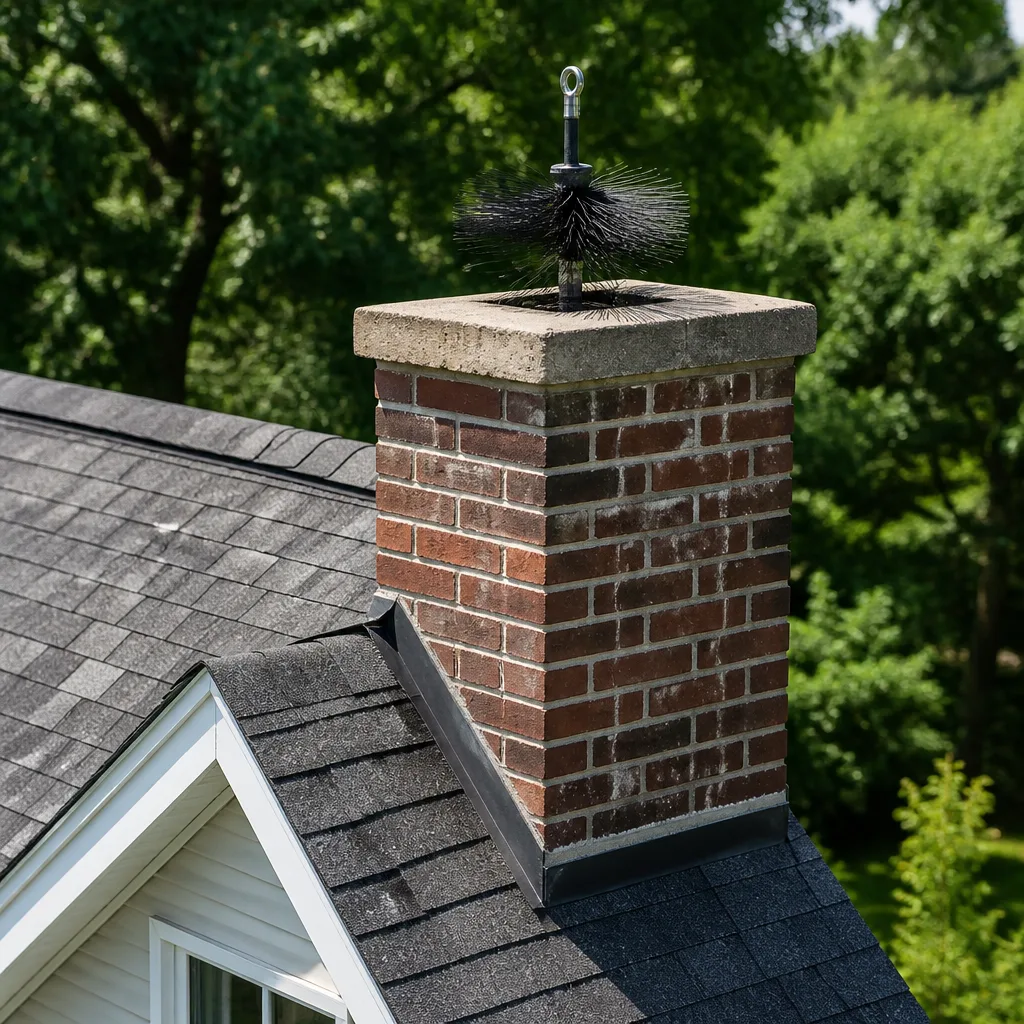 Sweep & inspection
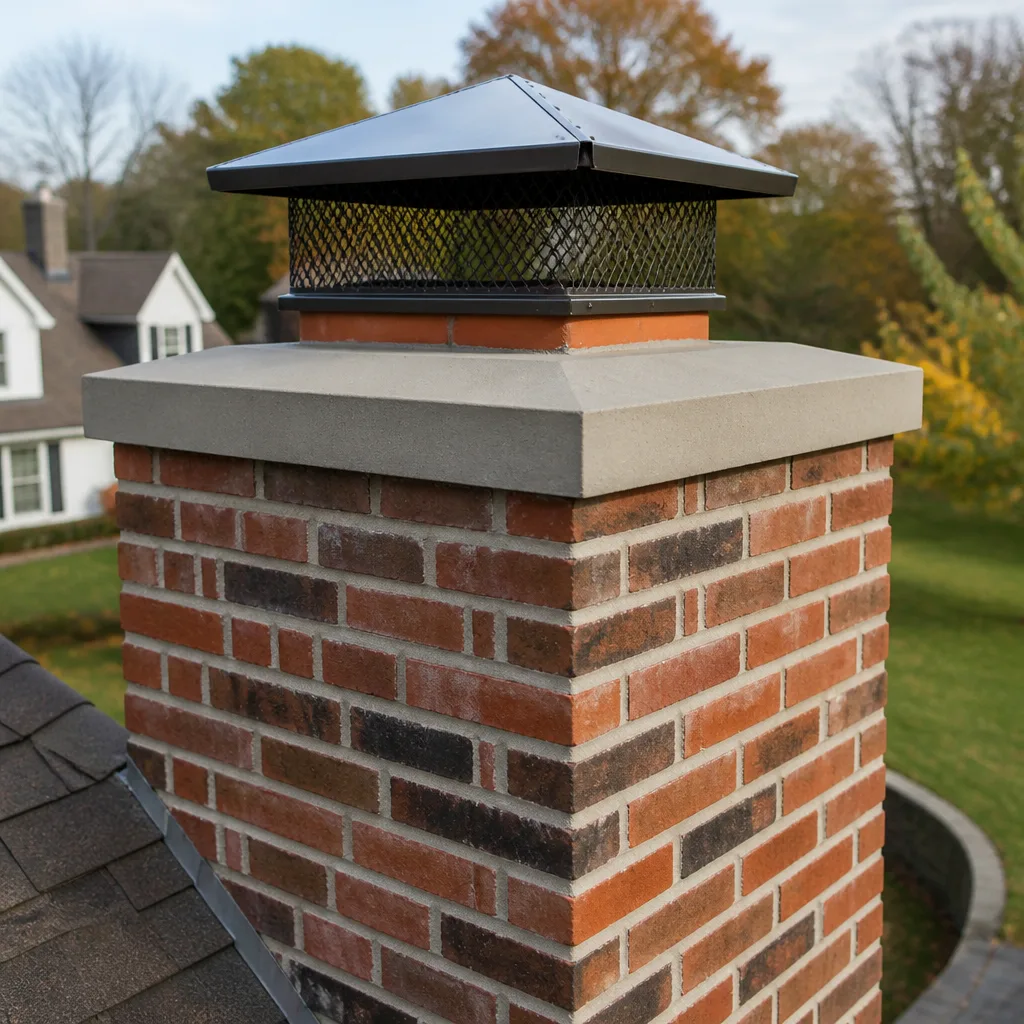 Caps & crowns
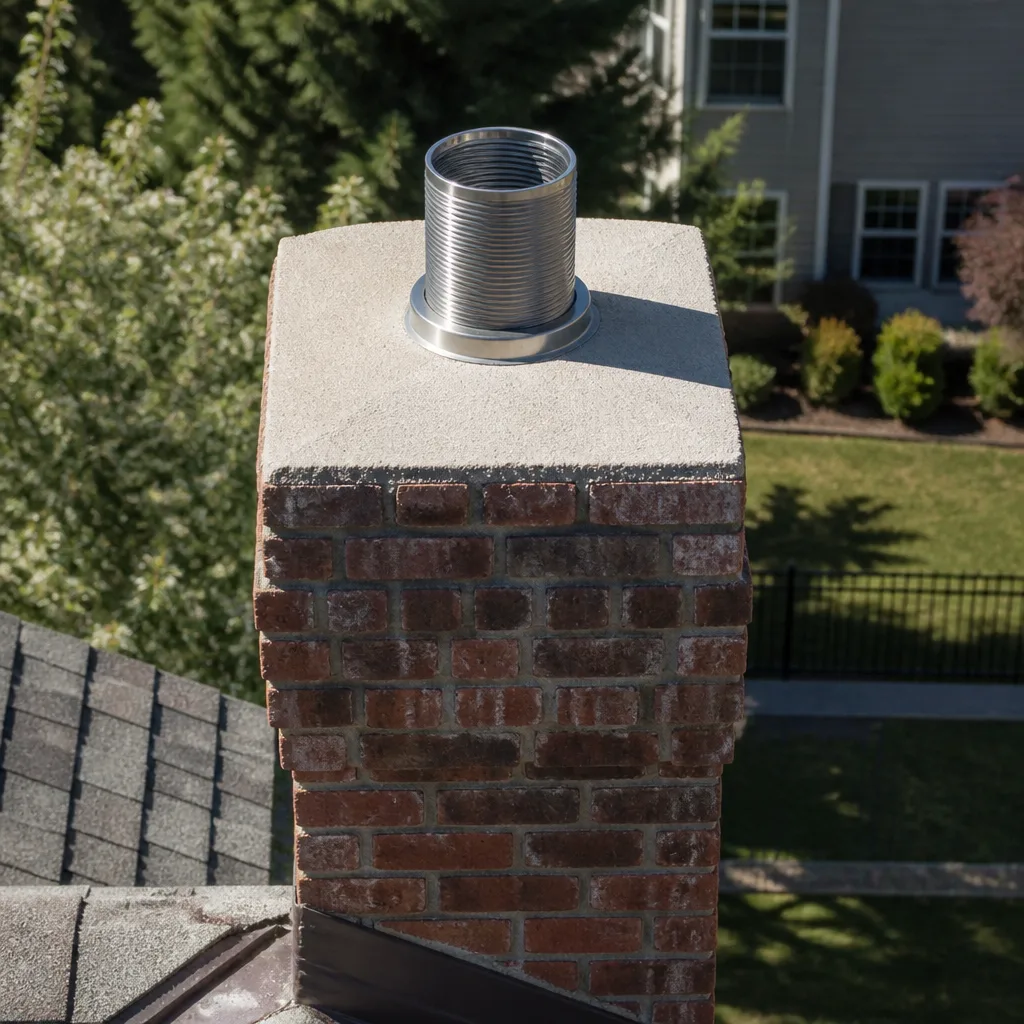 Flue relining
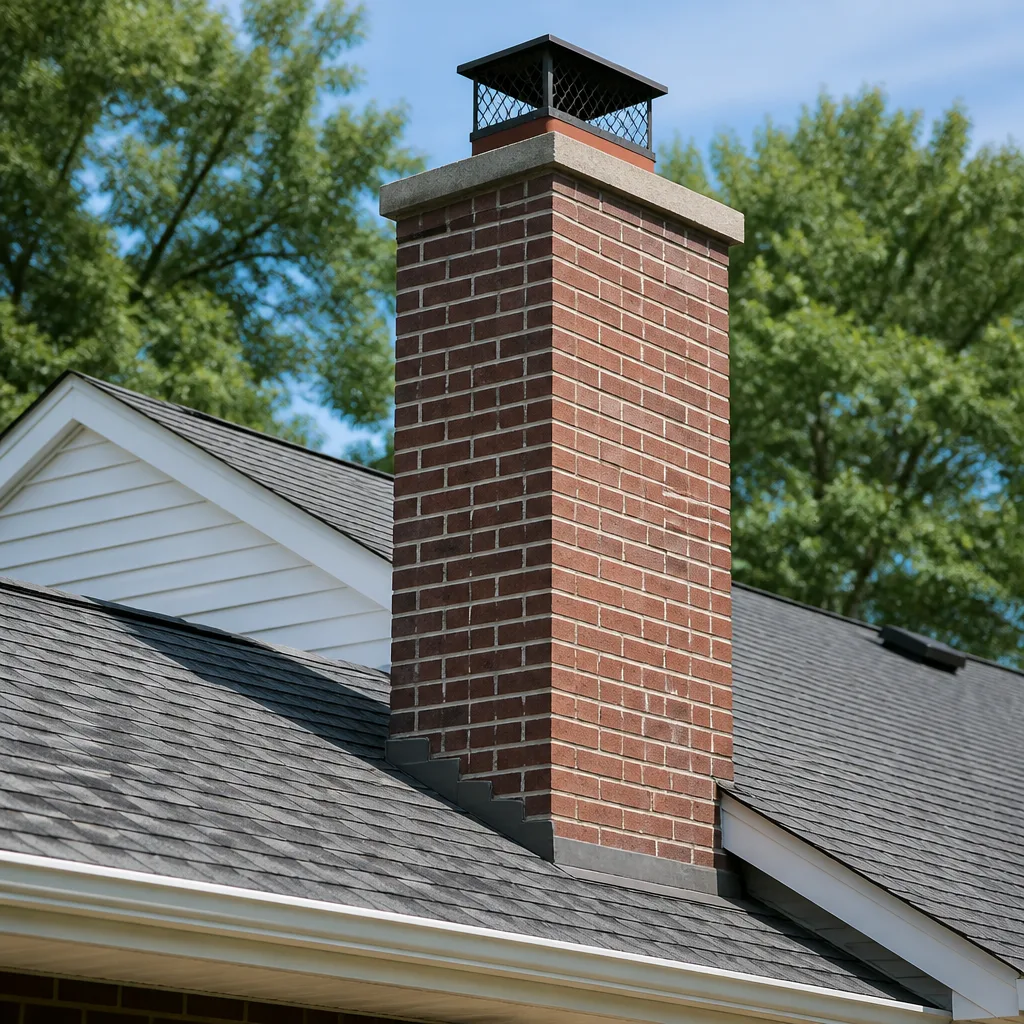 Masonry repair
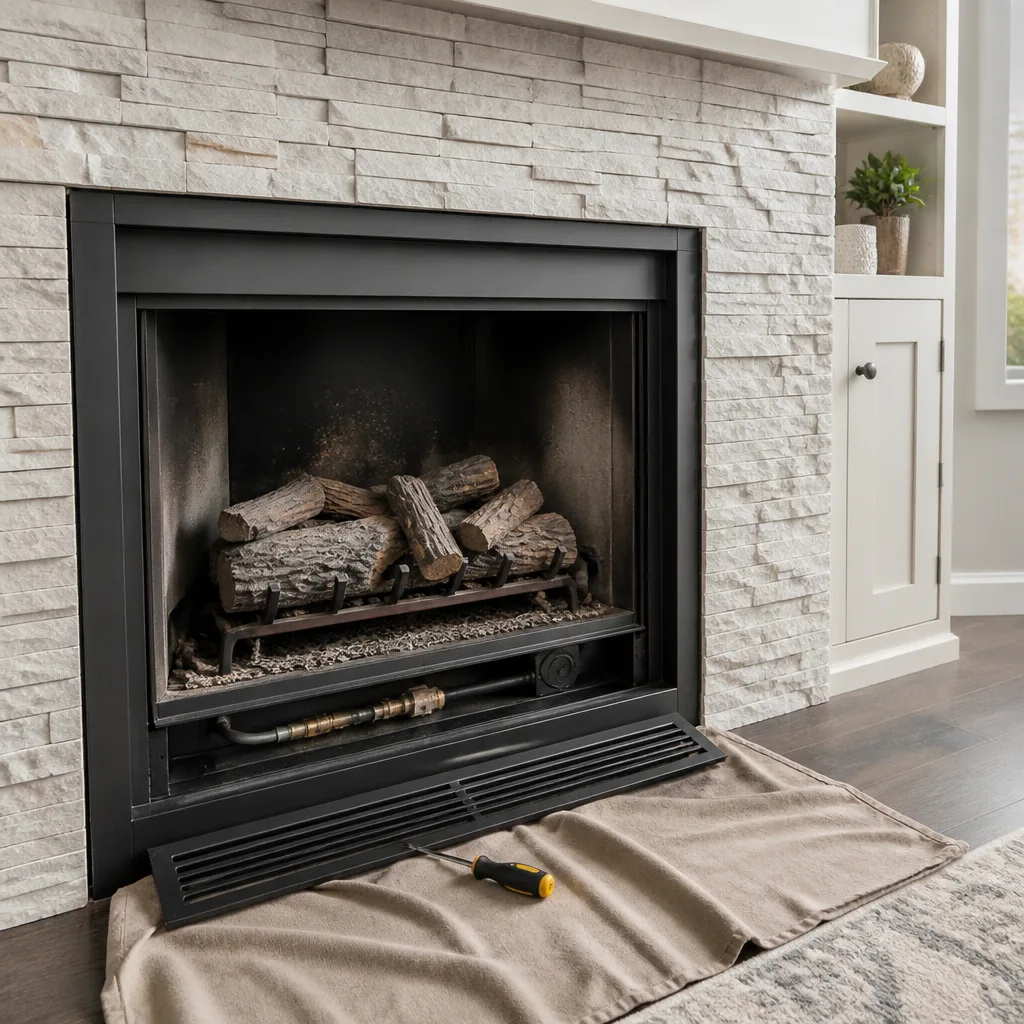 Gas fireplace service
Level 1 sweep and inspection to the NFPA 211 annual standard - flue, crown, cap, and flashing checked and photographed
Chimney sweep logs do not sweep chimneys. They loosen some creosote - which then falls where a brush and vacuum still have to collect it.
DIY vs Professional Chimney Cleaning: The Gravesend Homeowner’s Decision Guide
You can buy the same Copperfield brushes a professional sweeps with on any online marketplace. That’s the part nobody argues about. The problem isn’t the brush. It’s everything you can’t see from the firebox: the stage of the creosote coating the flue, the condition of the liner behind it, and the way a flue was originally built to run through a Gravesend attached home. This guide draws an honest line. It defines exactly when a homeowner can brush a chimney themselves and when doing so quietly creates a problem. We’ll cover the creosote stages, the equipment a legitimate DIY clean actually needs, the three conditions that rule DIY out no matter how handy you are, and the hybrid maintenance approach that makes real financial sense for anyone burning wood regularly.
Quick Answer
DIY chimney brushing is appropriate only when you’re dealing with Stage 1 creosote (light, dry, flaky soot), you can safely access the full flue from the roof or firebox, and no liner damage, offset, or draft change is present. The moment creosote has glazed into Stage 2 or 3, or you can’t see the full flue, that job belongs to a professional with camera inspection gear. For most Gravesend homeowners burning regularly, the honest answer is a hybrid: brush lightly between visits, and book a real chimney sweep once a year for the inspection that brushing can’t replace.
Styles & brands we work with
- Sweep & inspection
- Caps & crowns
- Flue relining
- Masonry repair
- Gas fireplace service
Table of Contents
- The Creosote Stages: Where DIY Works and Where It Doesn’t
- What a Legitimate DIY Clean Actually Requires
- Three Conditions That Rule Out DIY in Gravesend
- The Insurance and Liability Angle
- The Hybrid Approach: DIY as Maintenance, Not Replacement
- A Realistic Step-by-Step for a Safe DIY Brush
- How to Tell When You’ve Crossed the Line
- What a Professional Visit Adds That You Cannot
The Creosote Stages: Where DIY Works and Where It Doesn’t
Creosote is the single most important variable in the DIY question, and almost no homeowner guide talks about it clearly. Here’s the honest technical breakdown. Creosote forms in three recognisable stages, and only the first is a genuine DIY target.
- Stage 1 – soot and light flaky creosote. Dry, dusty, brushes off in grey-black flakes. This is the deposit left after a season of hot burns with reasonable fuel. A homeowner with the right brush and safe roof access can remove most of this. There’s still a reason to book a professional inspection annually, but the brushing itself is achievable.
- Stage 2 – hardened, crusty creosote. Darker, baked onto the flue wall, sometimes with a tar-like sheen. A hand brush skates over the top. This is not a DIY job. Removing it takes either rotary equipment or chemical treatment, and rough scraping can damage a clay liner tile or a steel liner seam without you realising it.
- Stage 3 – glazed creosote. Hard, glassy, sometimes shiny. This is fuel. It ignites at lower temperatures than the wood you’re burning, and once a chimney fire starts in glazed creosote the temperature inside the flue climbs fast. Never brush Stage 3 yourself. It requires professional removal, frequently with chemical treatment over multiple visits before any mechanical action.
In our experience around Gravesend, a homeowner who burns dry, seasoned hardwood and gets the flue hot enough each burn stays in Stage 1 most of the year. A homeowner who burns a lot of softwood, damp wood, or runs the fire low and smouldering for hours shifts straight into Stage 2. The deposit doesn’t announce itself. You feel it with a flue brush, or you see it with a camera. That gap is the whole argument for annual inspection.
What a Legitimate DIY Clean Actually Requires
A bowl of brushes is not the setup. If you’re going to brush your own flue, the equipment list is more specific than most homeowners expect, and the correct brush diameter matters as much as the type.
The kit for a safe DIY brush
- Correct-diameter flue brush. Poly or wire depending on the liner type; the brush should be the exact nominal diameter of your flue, not oversized, not undersized. Copperfield makes a professional-grade set worth naming because sizing does the work a cheap brush can’t.
- Flexible rod sections. Enough length to reach the full flue length plus a few sections of margin. Sway in the rod is what damages liner walls, so rig stiff rods, not floppy ones.
- HEPA-rated vacuum. A shop vac without HEPA filtration releases fine soot back into the living space. Plan on a HEPA canister you can run continuously at the firebox.
- Drop cloths and plastic sheeting. Sealed at the fireplace opening and taped to the hearth.
- Head torch and dust mask. Rated for fine particulate, not a paper mask.
- A second person on the ground. Roof access alone is where DIY clean injuries come from, and the flue doesn’t care how experienced you are.
Realistic one-time cost for a homeowner buying this kit new: it usually lands in the same range as one or two professional sweeps. The rods and brush last years; the HEPA vacuum is the expensive piece. If you burn one cord a year or less, the maths rarely works. If you’re an active wood burner doing this between professional visits, it very often does. That cost reality shapes the entire Chimney Sweep Gravesend conversation – the equipment question solves itself once you decide how often you’ll actually use it.
Three Conditions That Rule Out DIY in Gravesend
Three specific conditions make DIY the wrong call regardless of your skill or the equipment you own. If any one of them is present, stop and book a professional. Each one is common in Gravesend’s housing stock.
1. Liner damage of any kind
You cannot see liner damage from the firebox. Cracks in clay tiles, split seams in a steel liner, and spalled mortar joints all hide behind the deposit until they’re exposed. Brushing a damaged liner can dislodge tile shards or cut a steel liner wall, and the damage you cause is exactly the kind that a professional inspection would have flagged before you touched it. If you’ve never had a proper camera inspection, treat your liner condition as unknown and don’t assume the flue is safe to brush blind.
2. Offset flues in attached homes
Gravesend has a lot of older attached homes and row-style construction where the flue doesn’t run straight up from the firebox. Offset flues jog to one side partway up, sometimes more than once. A straight brush on a flexible rod can’t follow that jog, and a homeowner working blind won’t know they’ve missed a section. The un-brushed portion of an offset flue is where creosote accumulates unobserved. A professional camera inspection reveals exactly what the flue does above the firebox.
3. Any recent chimney odour or draft change
Smell or draft is the flue telling you something changed. A stronger than usual creosote smell, smoke drafting back into the room, a fireplace that used to draw well and no longer does, or a sudden change in how the fire burns all point to a problem a brush can’t fix: a partial blockage, a failing cap, settling masonry, or a liner break. Brushing the flue won’t diagnose any of those. A camera inspection will.
If you recognise any of these three, book a chimney repair inspection rather than brushing it yourself. The cost of an inspection is a fraction of what a chimney fire caused by brushing over a damaged liner will cost.
The Insurance and Liability Angle
This is the section most DIY guides leave out, and it’s the one worth reading twice.
Insurance carriers don’t require an annual inspection by law in most of New York, but they do care about what was on record when a claim happens. If you have a chimney fire and the claim goes to your insurer, one of the first things they’ll look at is whether a professional inspection or sweep was documented at a reasonable interval. A home with no professional documentation in the file is a harder claim than one where the homeowner can show a sweep and inspection report from the previous season.
We’ve seen the question come up whenever a homeowner calls us after a small flue fire, and the honest answer is that policies vary by carrier and coverage terms. What doesn’t vary is that you cannot retroactively create an inspection record. The homeowner who brushed their own chimney successfully for years, then had one bad burn that sparked a flue fire, has no document showing the chimney was in good condition beforehand. The homeowner who had a professional inspection earlier that season has a report, a photo record, and a clean defence.
There’s a second liability angle too: if you sell a home in Gravesend, a documented inspection history is a strong disclosure item. Buyers and their inspectors ask about chimney records directly, and a stack of sweet sweep-and-inspection reports removes an entire negotiation problem.
The Hybrid Approach: DIY as Maintenance, Not Replacement
Here’s what actually makes financial sense for an active wood burner in Gravesend. Treat professional service as the inspection layer and DIY brushing as the maintenance layer. They do different jobs and one does not replace the other.
- Once a year: professional chimney sweep and inspection, with camera verification and a photo report. This establishes a record and catches the problems you can’t see.
- Mid-season or after heavy use: a light DIY brush of the straight portion of the flue. Removes Stage 1 soot and keeps the fire drawing well between professional visits.
- End of season: leave this to the professional. It’s the visit where repairs and cap or crown work get addressed while you have a specialist already on the roof.
The hybrid model is what makes the equipment cost sensible. A homeowner doing a proper professional annual plus a couple of DIY brushes in between is spending less on service and getting better deposit control than either a pure-DIY homeowner brushing blind or a pure-professional homeowner going two years between visits.
We name the brands we install – DuraFlex liners, HeatShield resurfacing, Copperfield brushes – because the hybrid approach only works if the professional visit is a real one. A sweep house that only brushes and hands you a receipt doesn’t add the inspection layer, and the hybrid model collapses into pure DIY with a receipt.
A Realistic Step-by-Step for a Safe DIY Brush
If you’ve already confirmed you’re a Stage 1 flue with no liner damage, no offset, and no draft change, this is how a safe DIY maintenance brush runs. If any of the three conditions reappear, stop and book a professional.
- Wait for a fully cold chimney. Not warm, not cool. Cold. Brushing a warm flue sends soot into the air and against a warm liner wall with no warning.
- Seal the fireplace opening. Plastic sheeting taped around the firebox, with the HEPA vacuum running from inside the sealed cavity so any airborne soot gets captured rather than released into the room.
- Get roof access or a firebox-only access. If you can’t safely reach the top of the flue, don’t. Firebox-only brushing from the bottom works for a straight flue with access; it doesn’t work for anything else.
- Brush from the top down. Push-pull sections, one at a time. Don’t force the brush. If it stops hard, something is present that shouldn’t be, and that’s a professional problem, not a brush problem.
- Set the brush to full-flue diameter. Every section. The whole flue – not just the straight section you can comfortably reach.
- Clear debris from the smoke shelf and damper. This is where deposits collect and where a fire starts if left.
- Do a visual and smell check from the firebox and the roof. Any odour that persists after a full brush is a signal the flue needs a professional camera look.
Anything beyond those seven steps – rotary tools, chemical creosote removal, liner work, cap removal, crown repair – is where a legitimate DIY brush ends. We’d rather you call us for the last 10% than do the next 10% yourself.
How to Tell When You’ve Crossed the Line
The clearest practical test: after a full DIY brush, does the flue behave like a clean flue? If any of these remain true, you’re past the DIY ceiling.
- Creosote smell persists in the living space or from the firebox after a full brush.
- The brush passed easily through the lower flue but stopped, kicked, or felt a wall partway up.
- You see shiny or glassy deposits anywhere in the flue, or dark baked-on patches the brush didn’t move.
- Smoke rolls back into the room at fire-up, or the fire draws poorly.
- You can see mortar joints, cracks, or a damaged flue tile through the firebox after brushing.
- The chimney cap looks loose, missing, or damaged (a common cause of birds, rain, and draft changes).
If any of those remain, book the inspection. Our chimney cap & crown work routinely starts out as an inspection for exactly this cluster of symptoms, because loose caps and damaged crowns are the most common drivers of “my chimney changed” calls in Gravesend.
What a Professional Visit Adds That You Cannot
A professional chimney sweep visit adds three things that no amount of homeowner effort replicates: the camera inspection, the specialist judgement on repair, and the record. Every professional sweep here includes a camera inspection and photo report, so you see exactly what the flue looks like above the firebox – the offset flue, the liner wall, the smoke shelf, the chimney cap. The photos stay with you.
The second thing a professional visit adds is the ability to act on what the camera finds, in the same visit, without a handoff. A sweep-only operation can tell you the liner is cracked and then hand you a second contractor to fix it. A chimney-and-fireplace specialist can sweep, inspect, and repair the liner with HeatShield resurfacing or install a DuraFlex liner with the same visit, on the same report. That continuity matters when a repair is time-sensitive (a cracked liner venting into a home) versus something that can safely wait.
Third, the professional visit gives you the record we covered in the insurance section. That’s not a marketing argument. It’s a real document.
Common Mistakes to Avoid
- Buying an oversized brush to “do a better job.” An oversized wire brush on a clay tile liner grinds mortar joints and loosens tiles. Match the brush to the exact flue diameter, and use poly on a steel liner.
- Brushing from the firebox only on a jostled flue. Gravesend’s attached-home stock has offset flues. Brushing bottom-only means the offset portion never gets touched.
- Using a shop vac without HEPA filtration. It just relocates the soot into the air in your home. Run a genuine HEPA canister.
- Brushing over known liner damage. If you’ve never had a camera inspection, you don’t know whether your liner is intact. Brushing blind is how a hairline crack becomes a split liner.
- Ignoring the cap and crown while you’re already on the roof. Loose caps, missing caps, and damaged crowns are the most common cause of draft problems, and the fix is quick while you’re already set up.
- Burning damp or soft wood and expecting a DIY brush to keep up. Damp fuel shifts you from Stage 1 into Stage 2 with no warning between.
- Treating a DIY brush as a substitute for the annual professional service. The two do different jobs. Skipping the professional visit just removes the inspection from the equation.
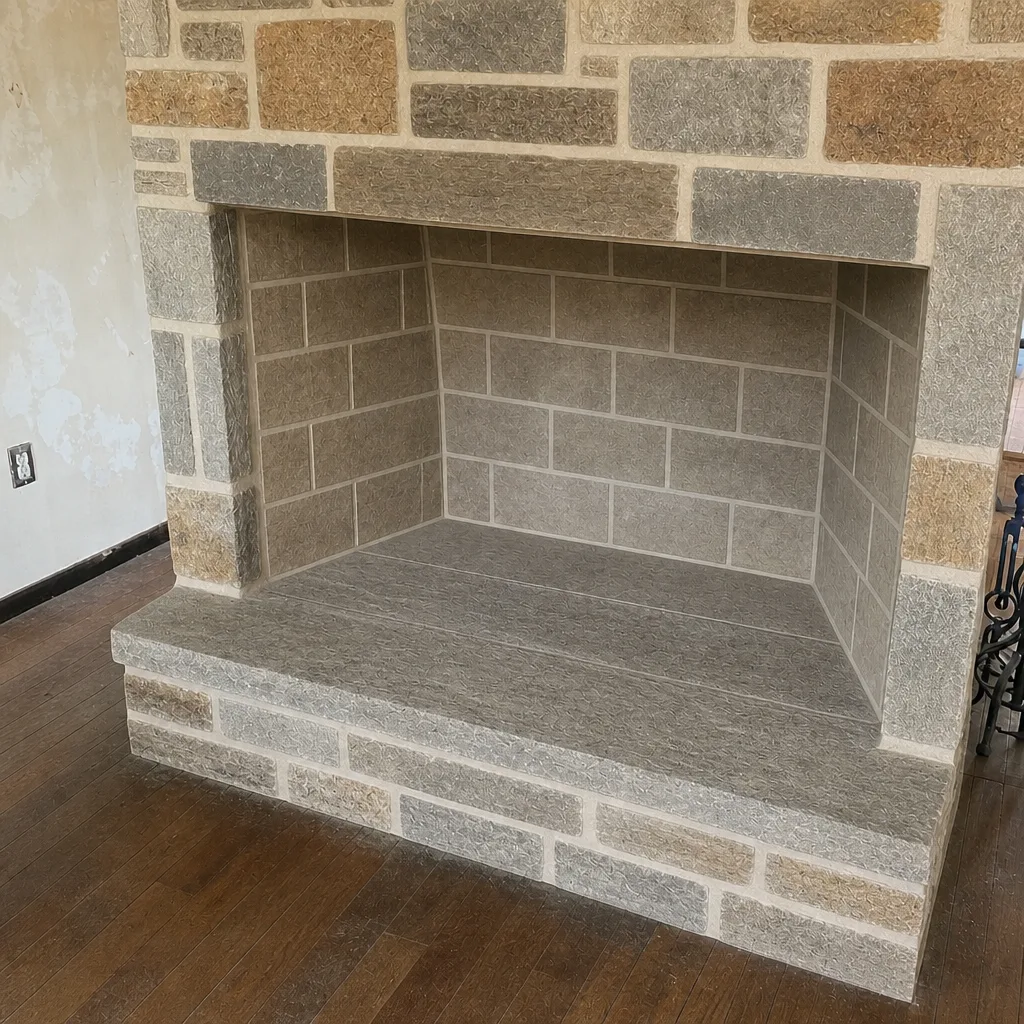
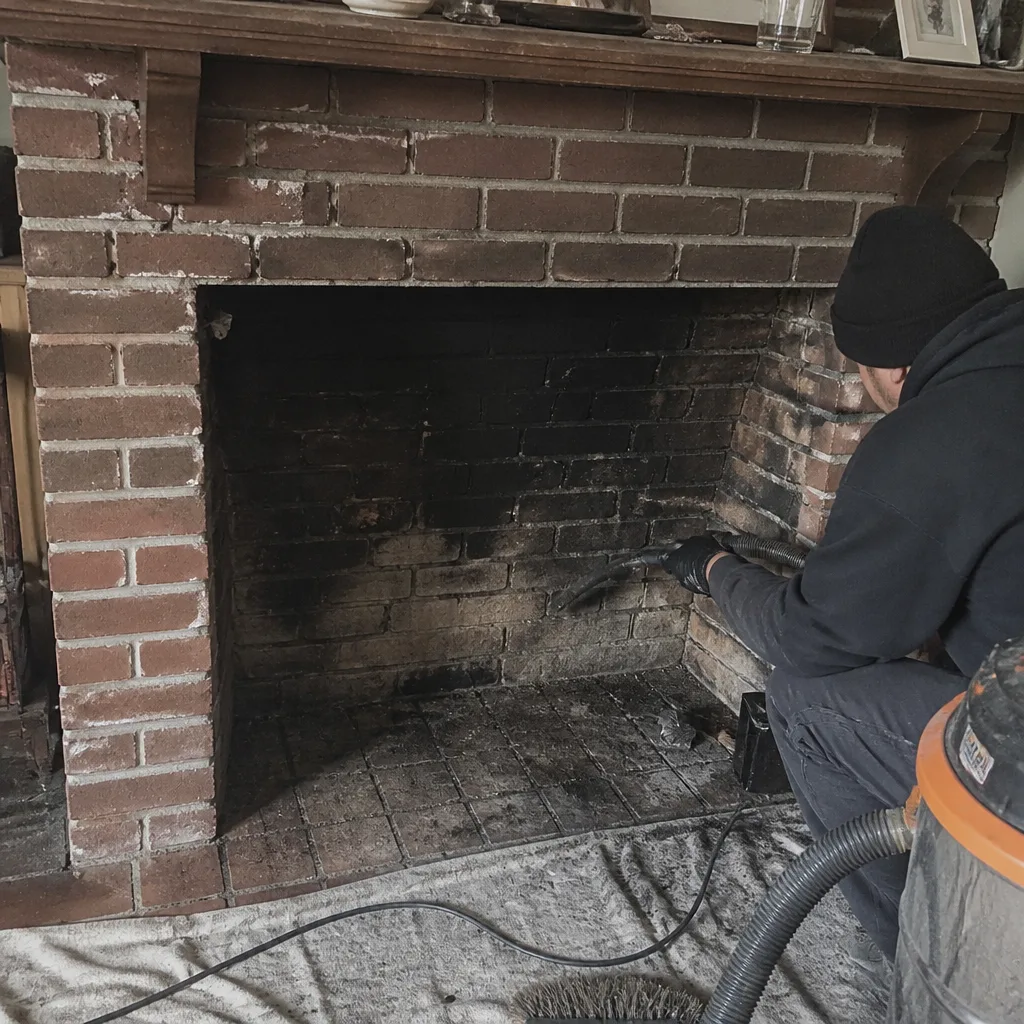
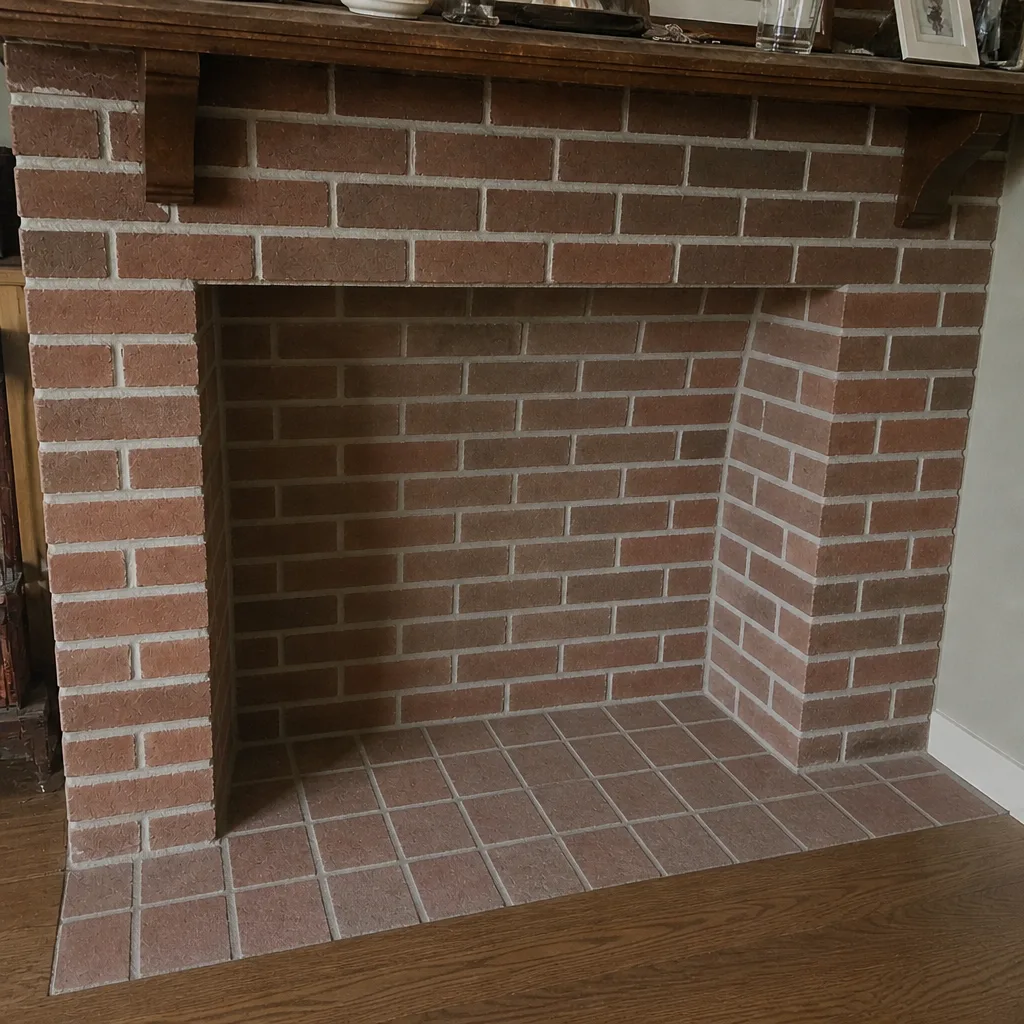
See the difference
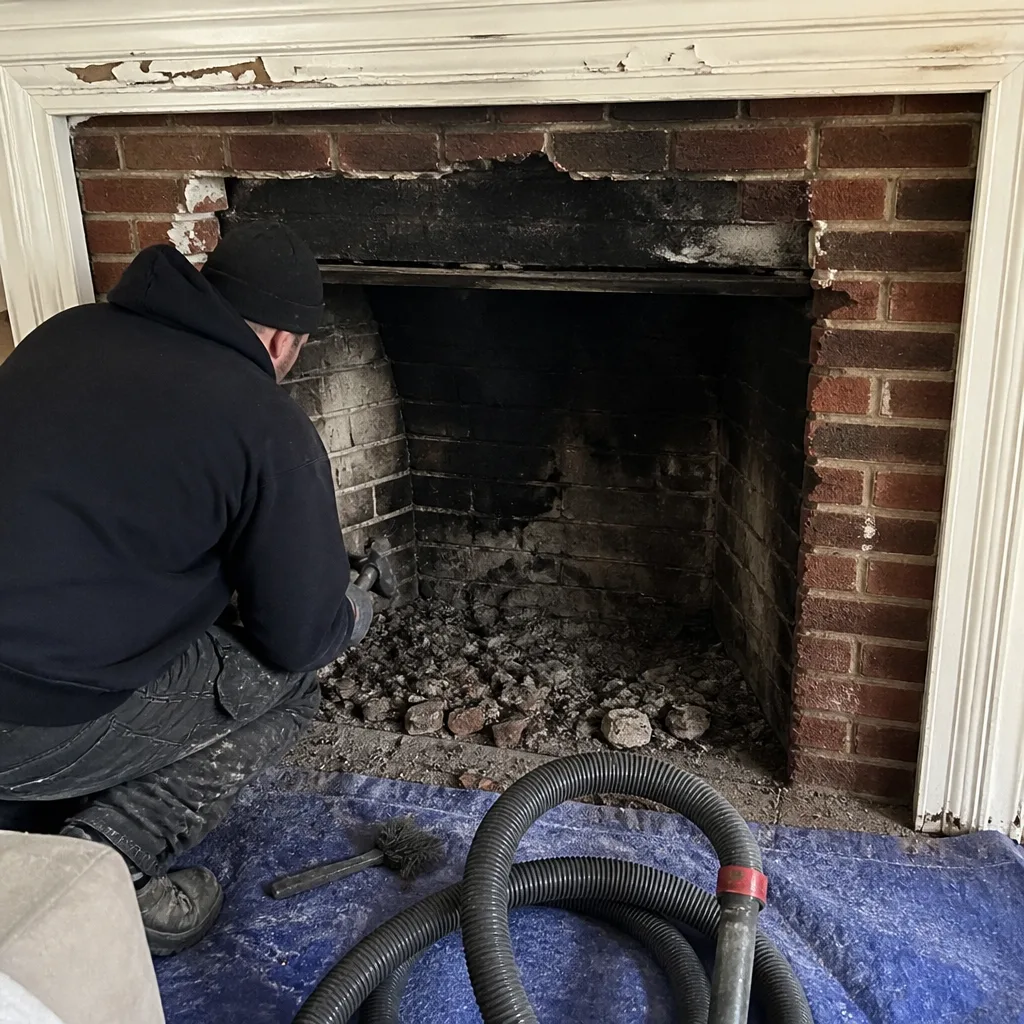 Before
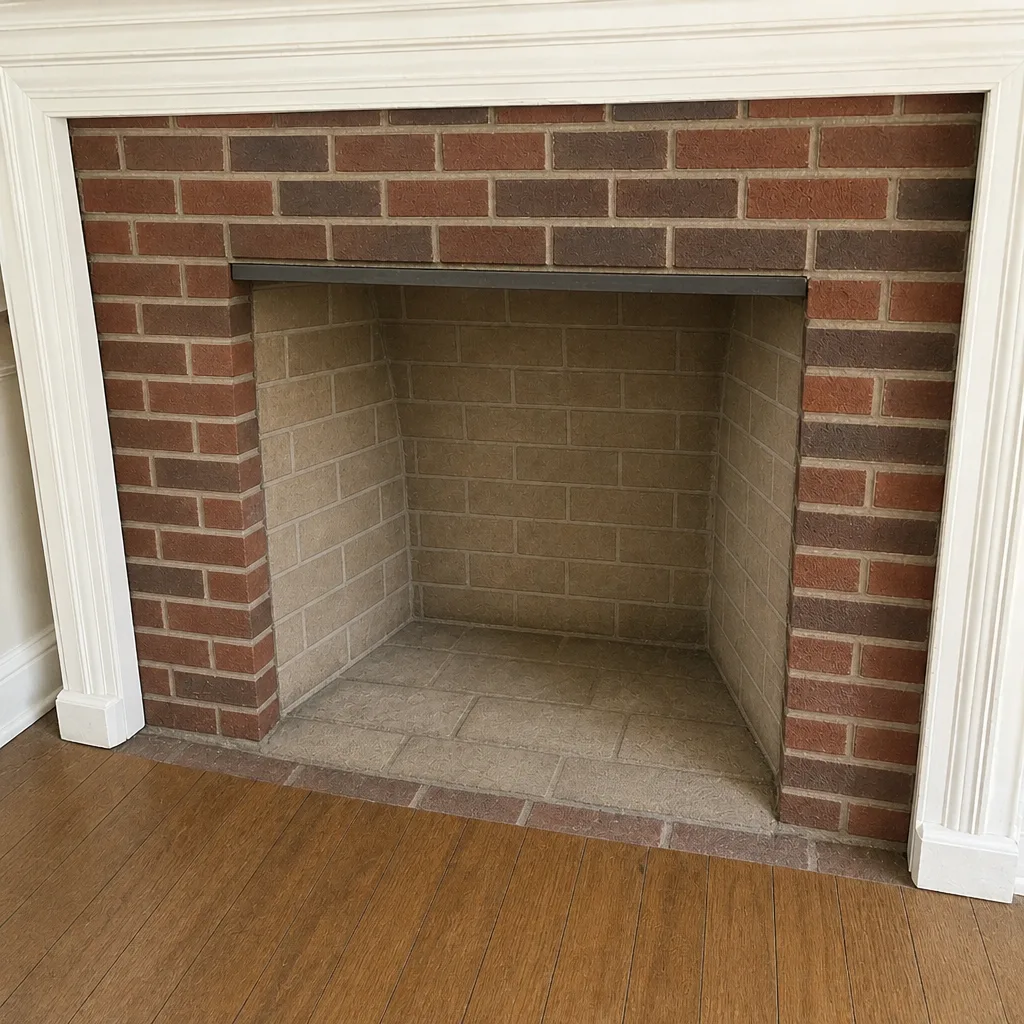 After
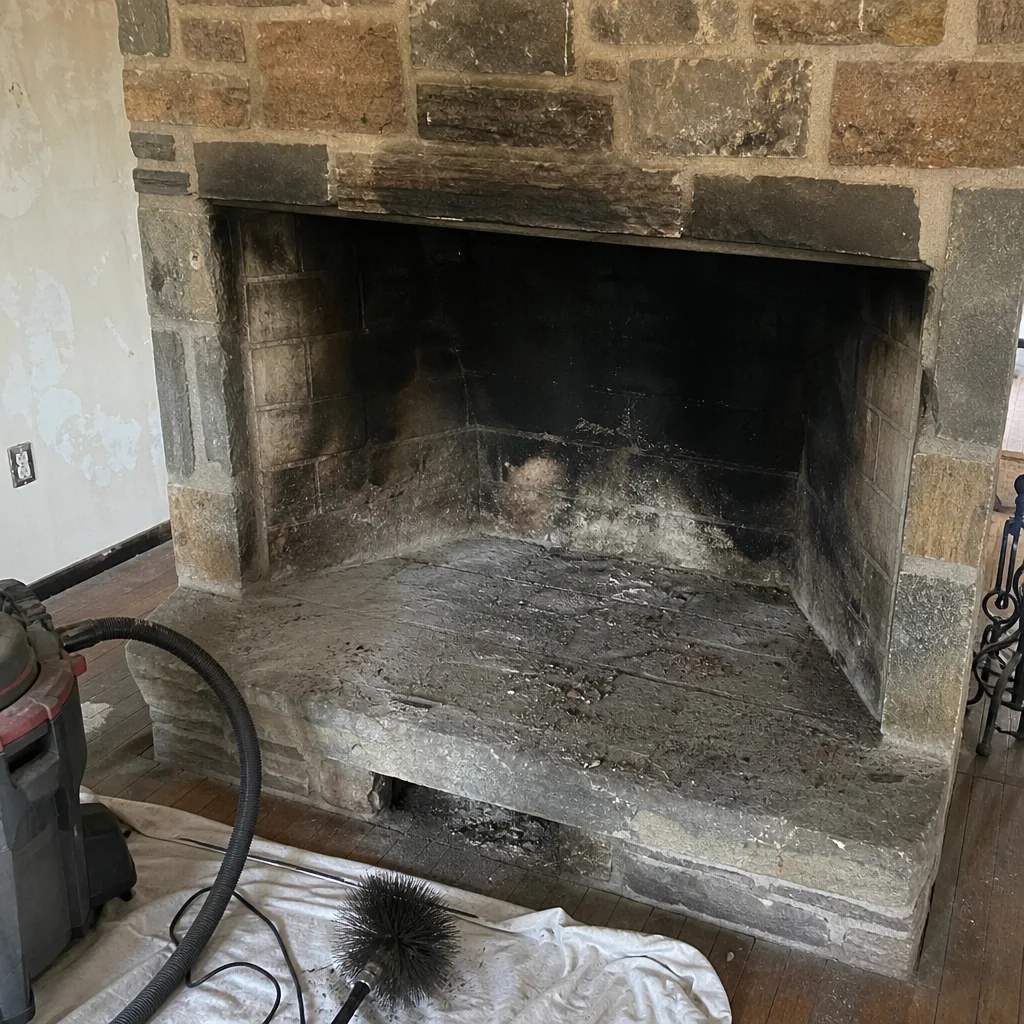 Before
 After
 Before
 After
When to Call a Professional
Call a professional the moment any of these are true: the deposit looks glazed, hard, or shiny; any liner damage is visible or has never been professionally inspected; the flue has ever been offset above the firebox; you’ve had any chimney odour, draft change, or smoke in the room; you’ve had a flue fire, however small; you’re buying or selling a Gravesend property; or it’s simply the start of burning season and you want a full inspection and record before you light the first fire of the year. Also call if your equipment setup doesn’t match the list above – the cost of a proper visit is a fraction of the cost of what happens when a brush goes through a liner wall you couldn’t see. Chimney Sweep Gravesend offers free estimates in Gravesend – call (855) 342-5978. Our technicians have up to 15 years of experience. We answer 24/7. Fast dispatch from 7am to 7pm, Sunday through Friday.
Frequently Asked Questions
Yes, if you have Stage 1 soot only, safe access to the full flue, no liner damage, no offset flue, and no draft or odour change. If any of those conditions isn’t met, DIY is unsafe and the job belongs to a professional with camera inspection equipment. For most Gravesend homeowners burning regularly, a light mid-season DIY brush is fine, but the annual professional inspection isn’t optional.
A typical professional sweep and inspection in Gravesend is priced per job by written estimate, agreed before the visit. We quote the flat price up front so there’s no surprise, and the camera inspection and photo report are included in that quote. The written estimate sets the final price. Call for a free estimate.
You may not know until the next fire. A cracked or split liner lets creosote and heat into the surrounding structure, which is the direct path to a chimney fire that escapes the flue. That’s why a professional camera inspection precedes any DIY brush on a flue you haven’t had inspected – it confirms what you’re brushing and whether it’s safe to brush. If you’ve brushed a flue blind and something feels off, book an inspection rather than waiting for the next season.
No. Stage 2 and Stage 3 creosote are hard, baked or glazed deposits that a hand brush skips over, and rough scraping can damage a clay tile or steel liner. Removing them safely takes rotary equipment or chemical treatment over several visits, then mechanical removal. Glazed creosote is also fuel – brushing it without removing it does nothing to reduce the fire risk. A professional needs to see the flue with a camera and set the right treatment plan.
The hybrid approach: professional sweep and inspection once a year for the record and the camera check, plus light DIY brushing of the straight portion of the flue between visits when the deposit is still Stage 1. That splits the cost over the year and keeps deposit under control, unlike a pure-DIY approach where every inspection is missed. The key is that the professional annual visit isn’t the part you skip.
Yes. Brushing removes deposit; inspection reveals the condition of the liner, any hidden cracks, cap and crown condition, and whether the flue has an offset. Those things can’t be seen from the firebox and are exactly what the DIY brush can’t tell you. It’s the inspection layer that catches problems early and gives you the record for insurance and future sale.
The Bottom Line
The brush isn’t the line between DIY and professional. The line is the creosote stage, the liner condition, and whether your flue has ever been properly inspected. If you’re a Stage 1 flue with a clean liner, no offset, and no draft issues, a light mid-season DIY brush on a stiff-rod, correctly sized, HEPA-filtered setup is a legitimate maintenance supplement. Everything else – Stage 2 or 3 creosote, unseen liner damage, offset flues in Gravesend’s attached homes, any odour or draft change – belongs to a professional with camera gear and the ability to repair what the camera finds. The financial case for the hybrid model only works if the annual professional visit happens on the professional side of the line. For everything beyond that line, a single inspection is the cheapest call you’ll make all season.
If you’d rather have one specialist handle the sweep, the inspection, the cap and crown work, and the liner repair when it’s needed, that’s what we do. We work with professional-grade lines – DuraFlex, HeatShield, Copperfield, Olympia Chimney, Famco, and Gelco – and we name the brands because materials matter as much as labor. When you call, you get a free estimate, a flat price agreed before booking, a camera inspection and photo report included, and no upsell you can’t verify on the screen. Call (855) 342-5978 for a free estimate. We answer 24/7. Fast dispatch from 7am to 7pm, Sunday through Friday.
Written by the team at Chimney Sweep Gravesend.